
If you’re managing a large commercial or industrial space, you are likely all too familiar with the energy-draining problem of temperature stratification in buildings. This phenomenon, often referred to as HVAC stratification, occurs when layers of air at different temperatures fail to mix effectively, leading to significant inefficiencies and occupant discomfort. To combat this issue, specialized air mixing equipment is essential. The solution offered by Blender Products, Inc. is the patented channel blender, designed specifically to eliminate these thermal layers and restore uniformity to your air distribution system. Contact us today.
The Physics of Stratification
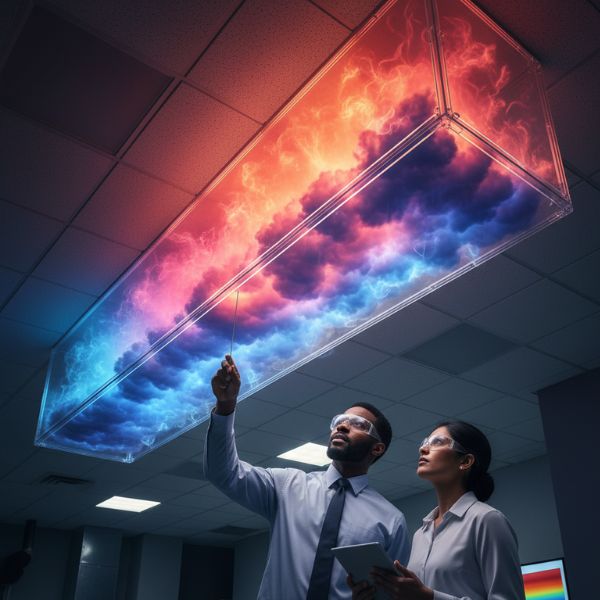
You understand that heat naturally rises and cold air sinks, a process governed by density. Within HVAC systems, this leads to predictable stratification: hot, less dense supply air rides along the top of a duct or plenum, while cold, denser return or outdoor air settles at the bottom. When you have two different streams—say, hot coil discharge and cold bypass air—they travel without adequately mixing, which is the core cause of the stratification problem you face.

The Operational Impacts
This unmixed air causes significant operational issues for you. Firstly, temperature sensors placed within the stratified air often read only one layer (e.g., the hot layer), leading the system to inaccurately believe it has achieved the target temperature. This false reading forces your HVAC unit to consume more energy, constantly overheating or over-cooling the space unnecessarily. The result is wasted utility costs and inconsistent comfort levels for occupants.
Introducing the Channel Blender
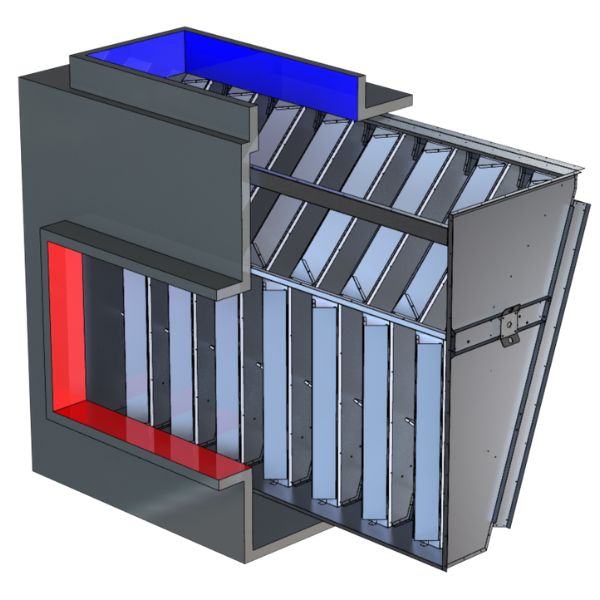
The channel blender fundamentally addresses this problem by acting as an air stratification mixing box. Unlike passive baffles or simple vanes, this device uses a unique internal geometry—a series of intersecting channels—to aggressively disrupt the laminar flow of the stratified air streams. By splitting and redirecting the airflow multiple times within a very short distance, the blender creates controlled, high-intensity turbulence.

Achieving Uniformity through Intense Mixing
The primary function of the channel blender is to facilitate thorough air mixing to prevent stratification. This patented mixing action is so effective that it can homogenize highly stratified air streams—often achieving 90% or greater uniformity—in a duct length equivalent to just one diameter. This rapid, complete mixing ensures that the air temperature you measure at the outlet is truly representative of the air delivered to the building, correcting the faulty sensor readings previously encountered.

Energy Savings and System Longevity
By installing this specialized air mixing equipment, you gain immediate control over your thermal environment. Uniform air delivery allows your heating and cooling coils to operate closer to their design efficiency, reducing run-time and peak load. For your organization, this translates directly into verifiable energy savings and often qualifies for utility rebates. Furthermore, consistent temperatures prolong the life of sensitive HVAC components by reducing thermal stress caused by wildly fluctuating air conditions.
CONTACT US TODAY
The existence of air stratification directly undermines your building’s energy efficiency and comfort objectives. Implementing the channel blender is a proven, passive, and highly effective way to solve this persistent issue. By ensuring the thorough mixing of air streams, you can achieve thermal uniformity, optimize system performance, and realize substantial, long-term operational savings. Contact us today.